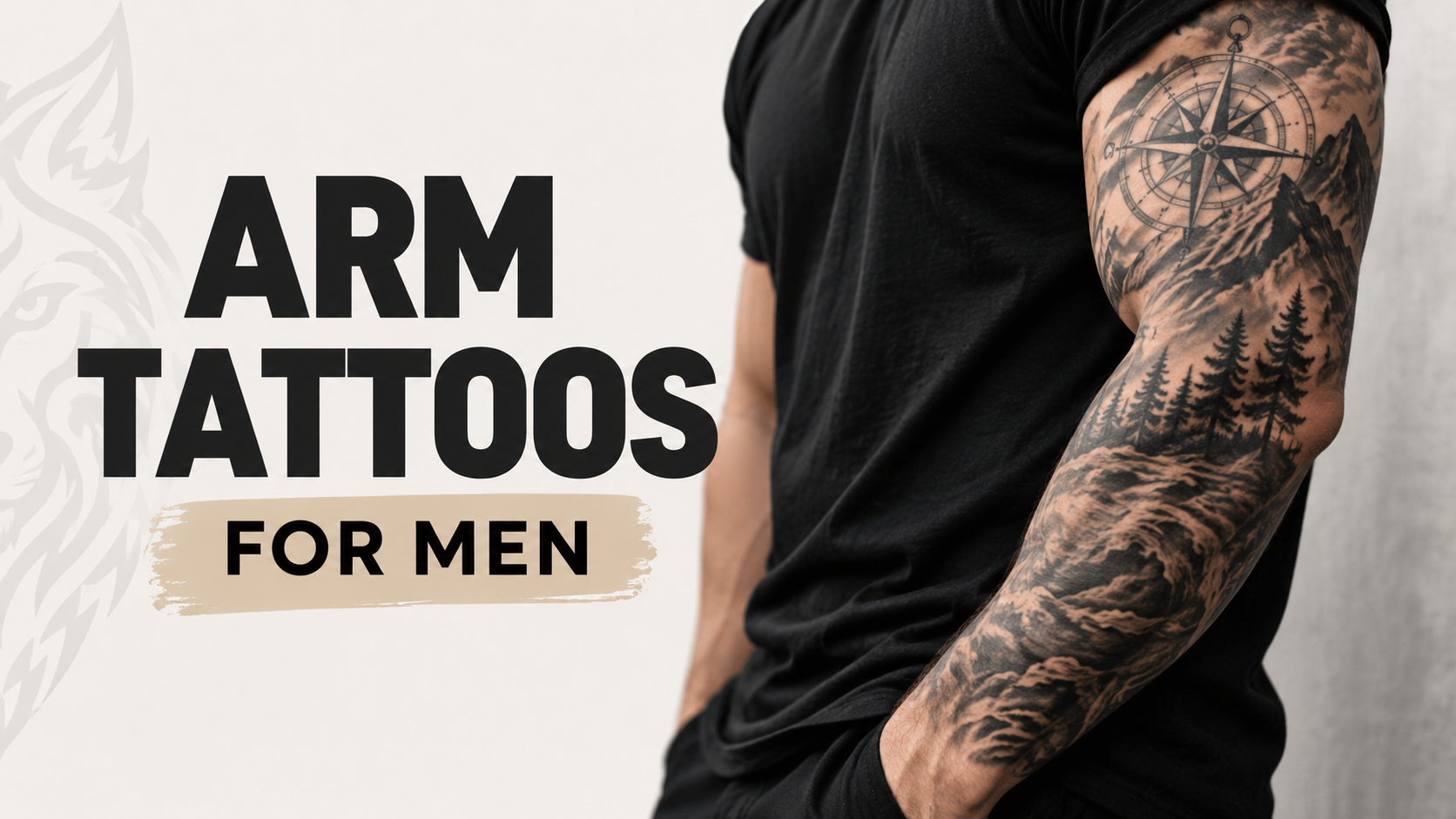
Arm Tattoos for Men: 16 Forearm, Upper Arm & Sleeve Ideas

By Nathan Cole
MyClaw Editorial
AI Tattoo Generator
Turn Your Arm Tattoo Idea Into a Design
Create a custom concept for your forearm, upper arm, or sleeve, then refine it before sharing it with your tattoo artist.
Design My TattooAI Takeaway
- Which arm tattoo ideas suit different looks? Try a botanical sprig or short script for a restrained design, an animal portrait for a prominent piece, or a planned sleeve for broader coverage.
- Forearm or upper arm? The forearm puts a design in everyday view; the upper arm offers space around the bicep and shoulder. Check how either placement looks with your usual sleeves.
- Can a small tattoo become part of a sleeve? It can, but plan its position and surrounding space with an artist before adding nearby pieces.
- How can you explore a custom version? Use MyClaw Tattoo Generator to generate and refine a concept, then let your tattoo artist adapt the final design to your arm.
Forearm Tattoos for Men
The forearm offers a long canvas between elbow and wrist. Choose the main viewing angle: facing you, facing outward, or wrapping around the arm. Check how the design changes when you turn your wrist.
1. Botanical sprig. An olive branch, fern, or plant from your childhood garden can follow the forearm’s length. Fine outlines create a lighter look; filled leaves add contrast. Keep space between overlapping leaves, and use a real plant’s branching shape for a personal reference.
2. Coiled snake. Try a long S-shaped snake for a narrow panel or a looser coil that wraps toward the outer forearm. Place the head where you want attention to land. If the design feels crowded, simplify the scales before adding flowers, daggers, or other surrounding objects.
3. Short script or ambigram. A name or single word makes lettering the main feature. Decide whether it should face you or someone opposite you. For a word designed to read upright and upside down, explore ambigram tattoo ideas. Check both readings at the intended size without explaining what they should say.
4. Mountain and river. Build a scene around a hometown ridge or memorable hiking route. A river can lead the eye along the forearm toward a mountain above it. Keep the skyline recognizable and the background simple, rather than squeezing a whole panoramic photograph into a narrow strip.

Upper Arm Tattoos for Men
The rounded shoulder and outer bicep offer different shapes to work with. Decide whether you want a self-contained piece or an image that could connect to a future sleeve.
5. Lion or wolf portrait. A front-facing head creates a different mood from an animal in profile. Compare a graphic silhouette with a shaded portrait, keeping the pose consistent. Give the face enough room to remain the focus, with few surrounding symbols.
6. Traditional rose and dagger. Let the dagger run down the outer bicep, with the rose crossing it near the center. Bold outlines and a limited palette give this classic pairing a clear shape. Adjust the flower’s color or add a short banner if you want a personal detail.
7. Geometric shoulder design. Arrange interlocking shapes around the shoulder cap, then decide whether they should stop at a crisp border or open into separated forms down the bicep. That edge changes the whole look. View the proposed pattern with your arm relaxed as well as raised.
8. Koi and waves. Curve one koi around the upper arm, with waves following its movement. Keep the fish distinct from the background and decide how far the composition should wrap. For a Japanese-inspired piece, work with an artist who understands the style’s imagery and composition.

Still choosing a subject? Browse more tattoo ideas for a motif connected to your interests, then adapt its shape to the placement.
Small Arm Tattoos for Men
A small piece can sit on either the forearm or upper arm. Start with a subject you recognize from its outline, then decide how much detail it needs.
9. Mountain outline. Reduce a favorite landscape to its defining ridgeline, leaving out the river, trees, and sky. A low horizontal ridge and a single steep peak create different proportions. Choose whichever fits the available space more naturally.
10. Initials or a short date. Choose the exact characters before experimenting with type. Plain lettering, handwritten initials, and Roman numerals each create a different impression. Check dates and numeral conversions carefully, and have the artist assess the spaces inside and between characters at the proposed size.
11. A single star or crescent. A filled crescent gives a darker accent, while an outline leaves a lighter impression. Try it alone before adding a cluster of stars. If you might expand the design later, leave room for those additions rather than centering it in a future sleeve’s main space.
12. A personal object. A guitar pick, chess knight, or familiar tool can reference an interest without a caption. Identify the feature that makes the object recognizable and build around it. Remove decorative details that compete with that shape.

If a small concept only makes sense when you zoom in, simplify it with your artist before settling on the size.
Arm Sleeve Tattoos for Men
A full sleeve generally extends from shoulder to wrist; a half sleeve covers the upper arm or forearm. Decide whether you want one connected scene or a collection of separate pieces. That choice shapes how you plan the remaining space.
13. Japanese-inspired sleeve. Use a koi or dragon as the main subject, with a background that carries the design around the arm. Plan the shoulder, elbow, and wrist as parts of one composition. An artist experienced in the tradition can guide the choice and relationship of supporting imagery.
14. Blackwork botanical sleeve. Combine larger leaves with smaller stems and deliberate areas of bare skin. Choose one plant family for a consistent look or connect several through similar shapes. Let the open areas separate dark sections, especially where multiple branches overlap.
15. Black-and-grey nature sleeve. Place one animal or landmark at the center of the story, then connect it to a quieter landscape. A wolf above a forest or a bird above a mountain range gives you a starting arrangement. Keep the background less dominant so the main subject remains easy to find.
16. Traditional patchwork sleeve. Collect separate roses, swallows, daggers, or personal motifs with compatible outlines and color choices. Map the largest pieces first, even if you will add them gradually. Leave the small gaps undecided until you can see how the major placements work together.

If you already have ink, include it in your custom tattoo design brief. Show the whole arm and explain what must stay visible so your artist can plan future connections.
Choose the Right Arm Tattoo for You
When comparing arm tattoo ideas for men, narrow your shortlist by placement and coverage:
| Your priority | Explore | Resolve with your artist |
|---|---|---|
| Seeing the design daily | Forearm | Which way should it face? |
| Covering it with your usual clothing | Upper arm | Where does your sleeve actually end? |
| A restrained first piece | Small design | Which details work at this size? |
| A connected visual story | Half or full sleeve | How will it relate to existing or future ink? |
Before your consultation, note the exact location, approximate dimensions, color preference, existing tattoos, and whether you want to expand later. Compare ideas at roughly the size you intend to wear them.
For digital exploration, the AI tattoo concept guide explains flat artwork and placement previews. Review the flat design first, then use a preview to discuss position and scale. Confirm the actual fit with your artist.
Create Your Arm Tattoo Concept with MyClaw
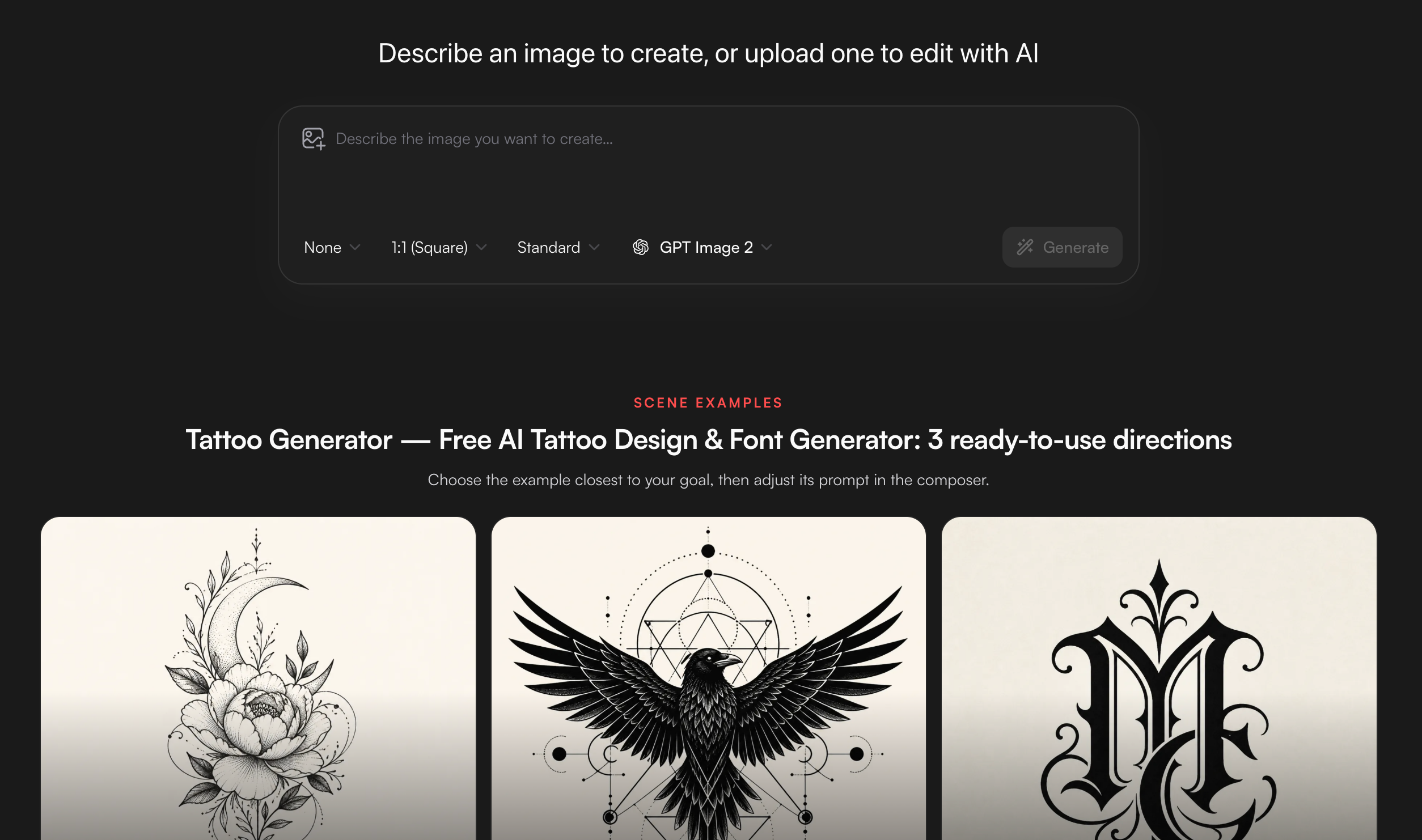
Turn your shortlist into visual references with MyClaw Tattoo Generator. Start from a written idea or explore its botanical, geometric, lettering, and illustrative examples, then refine the composition you prefer.
1. Describe Your Subject and Arm Placement
Enter the subject, exact location, and approximate size. Replace the dimensions in this example with your own starting preference:
Create an olive-branch tattoo concept for my outer forearm, approximately 12 cm tall. Use black ink, an elongated composition, and open space between the leaves. Show flat artwork on a plain light background, without skin or added text.
2. Explore a Style and Refine the Composition
Try a delicate botanical outline and a bolder blackwork version of the same branch. Once you prefer one, request a specific change: fewer leaves, a gentler curve, or wider gaps. Changing one feature at a time makes it easier to tell which version improves the design.
3. Download Your Favorite for Your Tattoo Artist
Download your favorites and keep placement and size notes alongside them. Check any lettering and mark details you want to retain. Your artist can use these concepts to develop the final composition and stencil, adjusting linework and spacing for your arm.
Take One Clear Direction to Your Artist
Before booking, look through the artist’s work for pieces similar in style and scale to your choice. Bring your preferred concept and one contrasting option, and explain what appeals to you in each. Leave the consultation with a clear direction for the final drawing.
Turn Your Arm Tattoo Idea Into a Design
Create a custom concept for your forearm, upper arm, or sleeve, then refine it before sharing it with your tattoo artist.
Design My Tattoo