
GPT-6.1 Terra Review: Benchmarks, Speed and Pricing

By Alex Morgan
MyClaw Editorial
GPT-6.1 Terra
Try GPT-6.1 Terra
Start a chat with GPT-6.1 Terra for coding, writing, or research.
Chat with GPT-6.1 TerraAI Takeaway
- Is GPT-6.1 Terra worth using? Yes, for high-volume agent and computer-use work. Sol still leads on the hardest coding tasks (OpenAI, Oct 27, 2026).
- What does GPT-6.1 Terra cost? $1 input and $5 output per 1M tokens, half of Sol's rate (OpenAI API docs, Oct 27, 2026).
- How fast is GPT-6.1 Terra? About 91 tokens per second. First token: 1.29s at low effort, 131.81s at max (Artificial Analysis, Oct 27, 2026).
- How smart is GPT-6.1 Terra? Intelligence Index 48 at max effort, four points below Sol's 52 (Artificial Analysis, Oct 27, 2026).
- Want to test a mid-tier model on your own recurring work? MyClaw keeps an agent running day and night, so a scheduled job can try a second model.
GPT-6.1 Terra Pricing and Specs at a Glance
GPT-6.1 Terra is OpenAI's mid-tier model, released October 26, 2026. It sits below GPT-6.1 Sol and above GPT-6 Luna. The table shows vendor-stated specs from OpenAI's API docs, checked October 27, 2026.
| Detail | GPT-6.1 Terra (OpenAI, Oct 27, 2026) |
|---|---|
| API model ID | gpt-6.1-terra |
| Context | 1.05M tokens (922K max input, 128K max output) |
| Modalities | Image and text input; text output |
| Knowledge cutoff | June 1, 2026 |
| Standard price | $1 input, $5 output (per 1M tokens) |
| Prompt caching | $0.05 read, $1.25 write (per 1M tokens) |
| Long context | Over 272K input: 2x input, 1.5x output |
| Batch and Flex | 50% below Standard |
| Fast mode | 2x Standard |
| Access | ChatGPT Work and Codex (Plus, Pro, Enterprise, Edu) and the API |
OpenAI says Terra's price is 50% below both GPT-5.6 Terra and GPT-6.1 Sol. Artificial Analysis lists the old Terra at $2 in and $12 out (Oct 27, 2026). Watch the 272K line. A longer prompt raises the bill for the full request. OpenRouter's listing (Oct 27, 2026) shows Flex at $0.50/$2.50 and Fast at $2/$10 per 1M tokens.
Our arithmetic at Standard rates: 1M input tokens plus 100K output tokens costs $1.50 on Terra and $3.00 on Sol. Caching and reasoning tokens are not included, so real bills run higher.

GPT-6.1 Terra Benchmarks: OpenAI Claims vs Independent Scores
Some figures come from OpenAI. Others come from Artificial Analysis. Each is labeled.
Independent (Artificial Analysis, Oct 27, 2026):
- Intelligence Index: 48 at max effort, 44 at high, 41 at medium, 36 at low.
- Neighbors: six points above GPT-5.6 Terra, four below Sol (52), ten above GPT-6 Luna.
- Coding Agent Index v2.0: 48 for Terra, 54 for Sol.
- Hallucination rate: 38%, down from 88% for GPT-5.6 Terra (AA-Omniscience). Accuracy rose two points.
- Terminal-Bench 4.0: about 20 points above GPT-5.6 Terra at max effort.
Vendor-stated (OpenAI, Oct 26, 2026):
- Terminal-Bench 4.0: 50.3% at max effort, up from 21.5% for GPT-5.6 Terra.
- Error rate: 4.3% at max effort and 16.7% at low effort, on OpenAI's own error-inducing prompts.
- Agents' Last Exam: at medium effort, 15 points above GPT-5.6 Terra at about one-third the cost. OpenAI says it matches Astra there at one-tenth the token price.
- MMMU-Pro and OSWorld 2.1: OpenAI reports gains over GPT-5.6 Terra, with no scores listed.
- Terminal-Bench-Science 0.1: at max effort, ahead of Sol and within five points of Opus 5.5.
The two Terminal-Bench figures differ. OpenRouter's benchmark table, which carries Artificial Analysis data, lists 55.6% for Terra at max effort (Oct 27, 2026). Test setups may differ. Treat both numbers as signals.
OpenAI says Sol and Astra stay better for the most complex coding. Our GPT-6.1 Sol for coding review covers that tier. Upgrading from the old Terra? The GPT-5.6 Terra vs GPT-5.5 guide shows the starting point.
GPT-6.1 Terra Speed: Fast Output, Slow First Token at Max

Terra writes fast. At max effort, it thinks for a long time first.
Independent (Artificial Analysis, OpenAI API, Oct 27, 2026):
- Low effort: 91.0 tokens per second, first token in 1.29s.
- Medium effort: 90.9 tokens per second, first token in 1.43s.
- Max effort: 90.9 tokens per second, first token in 131.81s.
Sol at max writes 69.4 tokens per second and needs 284.31s for a first token (Artificial Analysis, Oct 27, 2026). Terra is faster on both counts.
OpenRouter's live routing (Oct 27, 2026) shows lower numbers: a median of 49 to 62 tokens per second and 1.77 to 2.10s latency. Routing, load and effort settings explain the gap.
OpenAI says Terra finishes tasks over three times faster than GPT-6 Astra and Sol (vendor-stated, Oct 26, 2026). The first-token times show why max effort suits batch work only.
GPT-6.1 Terra Cost per Task by Effort Setting
Price per token is half the story. Effort changes how many tokens the model spends.
Independent (Artificial Analysis cost per Intelligence Index task, Oct 27, 2026):
- Low: $0.05 per task, 7.9M output tokens.
- Medium: $0.10 per task, 14M output tokens.
- High: $0.13 per task, 23M output tokens.
- Max: $0.40 per task, 130M output tokens.
- Sol at max: $0.72 per task, 67M output tokens.
Our arithmetic: Terra at max costs about 44% less per task than Sol at max. That is smaller than the 50% rate gap, because Terra spends nearly twice the tokens.
Artificial Analysis calls low and medium effort Pareto-optimal for cost. Max buys four more index points than high (48 against 44) for about three times the cost per task (our arithmetic).
OpenAI claims about 9x lower cost per task than Opus 5.5 at max effort (vendor-stated, Oct 26, 2026). We found no independent check of that figure. For a Sol-versus-Opus view, see Sol and Opus 5.5 head to head.
A low-cost setting that fails the job costs more than a stronger one that passes. Pick your pass rate first. Then find the lowest-cost model and effort pair that reaches it.
GPT-6.1 Terra Review: Pros and Cons
Pros:
- Half of Sol's token rate: $1 input and $5 output per 1M tokens (OpenAI, Oct 27, 2026)
- Intelligence Index 48 at max, within four points of Sol (Artificial Analysis, Oct 27, 2026)
- About 91 tokens per second, faster than Sol's 69.4 (Artificial Analysis, Oct 27, 2026)
- Hallucination rate of 38%, down from 88% for GPT-5.6 Terra (Artificial Analysis, Oct 27, 2026)
- Built for screenshots, forms and desktop tasks, plus a 1M context (OpenAI, Oct 26, 2026)
Cons:
- Trails Sol by four Intelligence Index points and six Coding Agent Index points
- Max effort waits 131.81s for a first token and spends 130M tokens
- Inputs beyond 272K tokens raise the bill for the full request
- Headline claims such as "9x lower cost per task" are OpenAI's own
Best Uses for GPT-6.1 Terra and Which Effort Setting
Use Terra for high-volume work. OpenAI names invoice entry, form filling, technical drawings and proposal drafting. Everyday coding fits too. In ChatGPT Work and Codex, OpenAI says the same plan allowance covers more Terra tasks than Sol tasks.
Stay on Sol or Astra for the hardest coding and long-running work. OpenAI says so itself. The top tier is reviewed in GPT-6 Astra: full review.
Our effort guide:
- Low or medium: volume jobs and anything a user waits on.
- High: a sensible default when quality matters.
- Max: offline batch work only.
Coming from a smaller model? Luna against the old Terra shows where this tier started.
Test Mid-Tier Models Like GPT-6.1 Terra on a MyClaw Agent
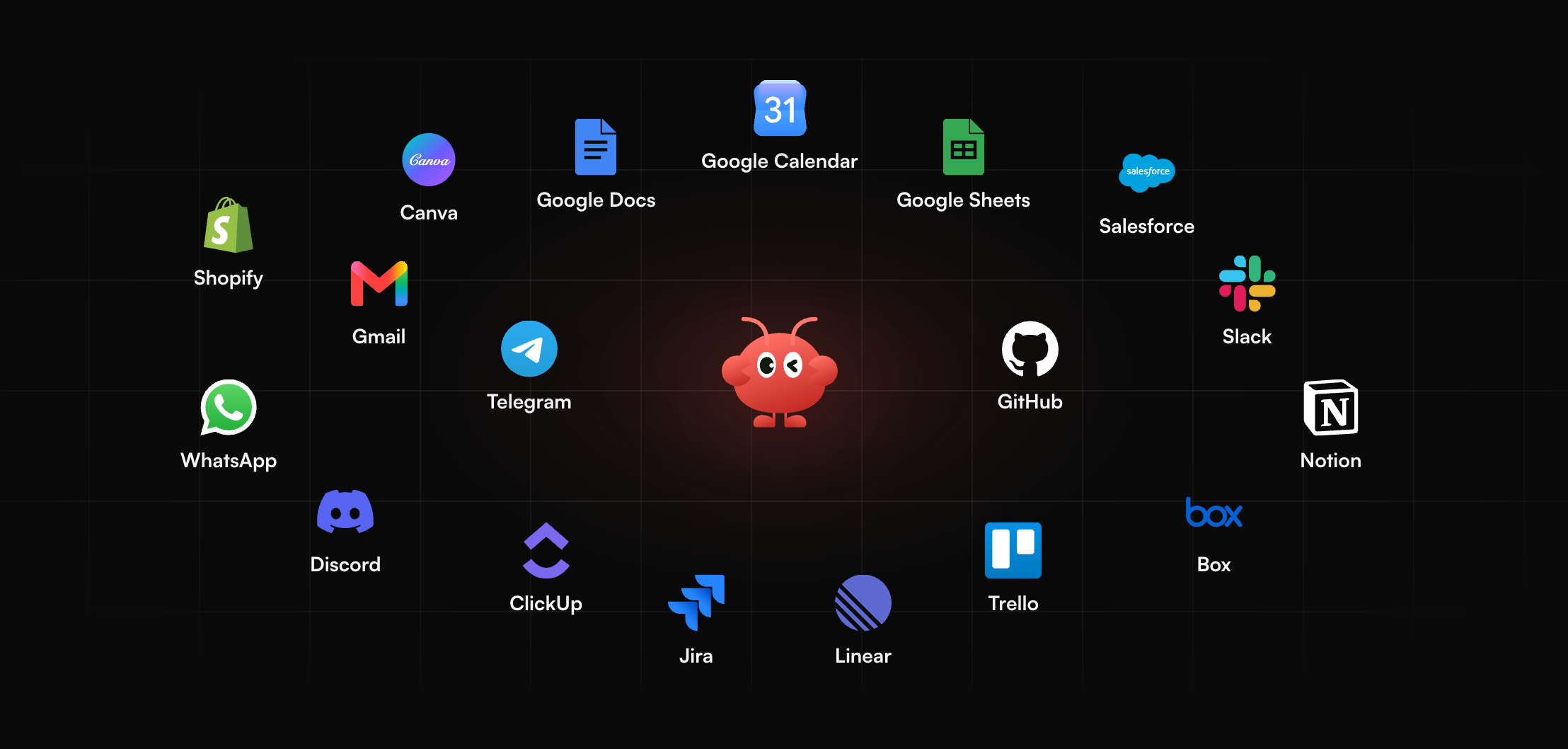
Benchmarks give you a starting point. Your own job gives you the answer. MyClaw manages OpenClaw and Hermes for you. Your agent stays always on and runs scheduled jobs while you are away. You do no server work. Setup stays light because everything here works with most popular models. Swap the model and keep the same task.
- Choose a repeatable job. An invoice check, a weekly report or a screenshot review works well.
- Run it on two models or two effort settings. Keep the prompt identical.
- Compare results on a schedule. Count accepted outputs, retries and wait time, then choose.
GPT-6.1 Terra Review Verdict
Yes, use Terra as your default mid-tier OpenAI model. It delivers most of Sol's measured intelligence at half the token rate, with faster output. Run low or medium for volume. Test high for quality. Keep max for batch jobs. Move a task up to Sol only when your own eval fails. Then re-check OpenAI's claims against independent scores as more data arrives.
Put GPT-6.1 Terra to work on a real task
Start a chat with GPT-6.1 Terra for coding, writing, or research.
Chat with GPT-6.1 Terra