LongCat-2.5 Review: Specs, Benchmarks and Pricing (2026)

By Olivia Hart
MyClaw Editorial
MyClaw
Run Best-in-Class AI Agents Now
Run OpenClaw or Hermes Agent on managed MyClaw hosting, so your AI agent stays online, updated, and ready for real work.
AI Takeaway
- What is LongCat-2.5? Meituan’s native multimodal LongCat model for long-horizon agent work: about 1.6T total / ~48B active per token, text plus vision (and video on the platform), aimed at complex codebases and full-project builds (LongCat blog, Nov 1, 2026; Meituan, Nov 2, 2026).
- How do you read LongCat-2.5 quality claims? Use vendor-labeled scores with dates—Terminal Bench v2.1 88.4, BrowseComp 91.9, DeepSWE v1.1 64.6—and treat asterisked peer columns as indicative (LongCat-2.5 evaluations table, Nov 2026).
- What does LongCat-2.5 cost on the API? Limited-time discounted PAYG lists about $0.30 uncached input, $0.006 cached input, and $1.20 output per 1M tokens; confirm live on LongCat pricing (docs, November 2026).
- Who should try LongCat-2.5 first? Teams running vision-aware coding agents or long harness jobs who will verify vendor benches on their own repos—not anyone who needs confirmed public weights today.
- How do you keep LongCat eval work running after hours? Use an always-on OpenClaw or Hermes agent on MyClaw to watch release notes, schedule your frozen test-prompt checklist, and summarize bench deltas—without babysitting a server.
What LongCat-2.5 Is and How You Access It
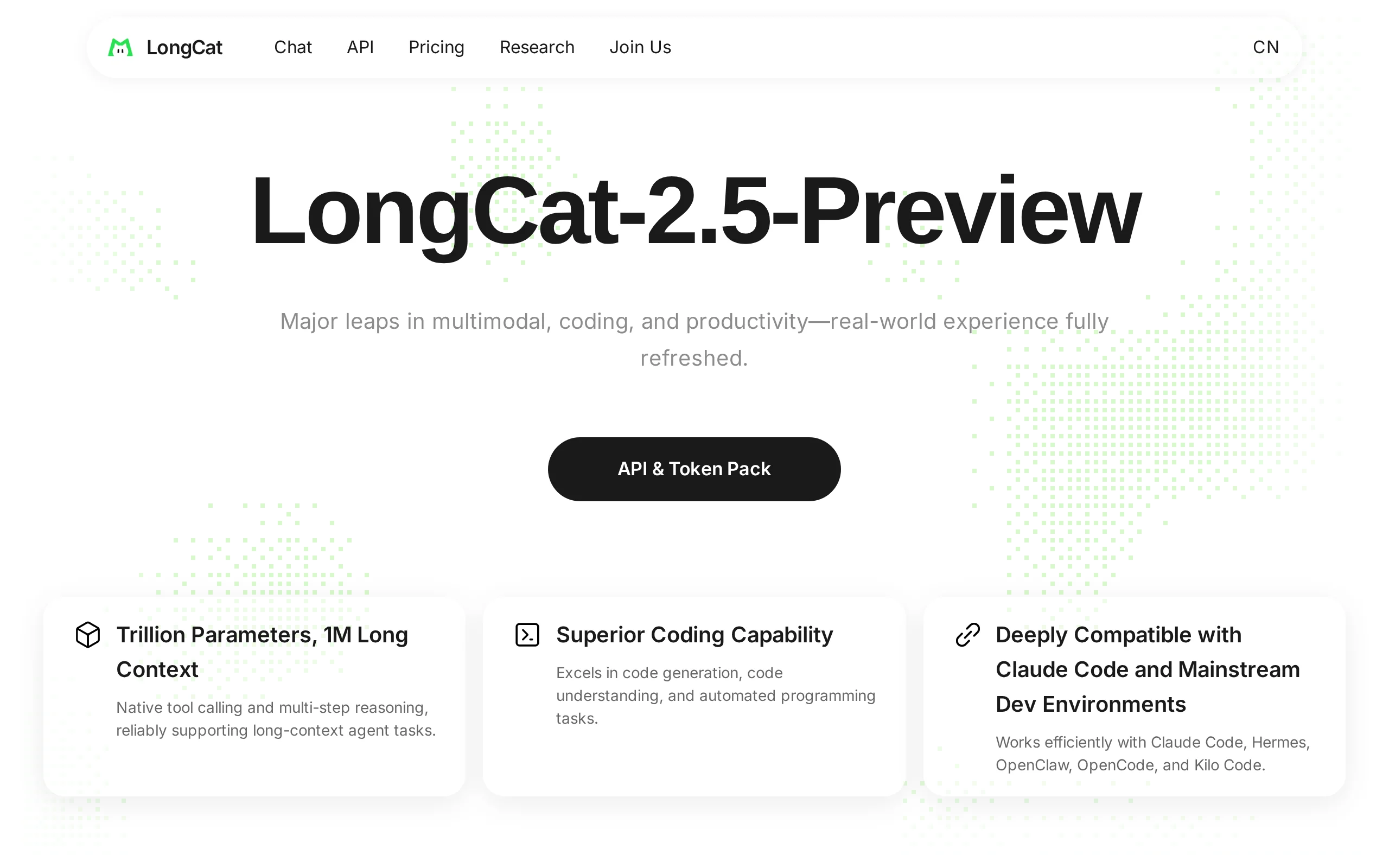
LongCat-2.5 is Meituan’s native multimodal model built for long-horizon agent work—multi-step tools, large codebases, and full-project builds—with stronger native vision than LongCat-2.0. Meituan’s public release landed on November 2, 2026 after a LongCat blog post dated November 1, 2026; the API change log marked the model available the same day, following a Preview that opened on September 25, 2026.
You call it as LongCat-2.5 on the LongCat API Platform through OpenAI-compatible or Anthropic-compatible endpoints, which keeps migration cost low if your agent already speaks those request shapes. Create a key, point your harness at the documented base URL, and keep LongCat-2.0 nearby for a few A/B runs before you switch defaults. Vendor notes list common harnesses such as Claude Code, Codex, Hermes, and OpenClaw. Public weights remain unconfirmed, so treat downloadable checkpoints as not generally available until Meituan says otherwise. For peer context, see Best AI Models Right Now and the broader Chinese AI Model landscape.
Specs That Matter for Real Jobs
Vendor materials describe a mixture-of-experts stack with about 1.6 trillion total parameters and roughly 48 billion activated per token. Context stretches to 1 million tokens with outputs up to 128K—enough headroom for multi-file repos, long tool traces, and overnight harness runs. Inputs cover text and images, with video supported on the platform path; outputs stay text-first while the model leans on native visual tokens for visual coding, creative design, and 3D-oriented tasks.
In practice you can keep a large repo map, a failing-test log, and a design screenshot in one thread without immediately truncating history. A careless harness that re-sends the full window on every tool step will still burn tokens fast, so pin what the agent truly needs and summarize the rest.
Vendor evaluation footnotes call out thinking mode (enable_thinking=on) for the published benches. Match that setting when you try to reproduce a score, then turn it off or on based on latency and token burn in your harness. Image and video size limits can shift with platform docs, so re-check the live limits before you wire a production vision pipeline.
LongCat-2.5 Benchmarks (Vendor-Labeled)
Headline numbers come from Meituan’s LongCat-2.5 evaluations table (November 2026). Peer columns marked with an asterisk are indicative or mixed-source, so treat them as directional rather than a sealed leaderboard. The jump from LongCat-2.0 is large on several agent and browse rows; the same table still shows LongCat-2.5 trailing listed peers on some hard coding measures.
| Benchmark (vendor table, Nov 2026) | LongCat-2.5 | Note |
|---|---|---|
| Terminal Bench v2.1 | 88.4 | Strong agentic coding row |
| Terminal Bench v4.0 | 38.5 | Up from 3.0 on LongCat-2.0 |
| BrowseComp | 91.9 | Near the top of the listed set |
| PaperBench | 82.1 | Research-style agent work |
| DeepSWE v1.1 | 64.6 | Trails DeepSeek-V4.1-Flash at 74.2* |
| Vision2Web | 78.6 | Visual coding / web rebuild |
| 3DCodeBench Text→3D | 55.4 | 3D-oriented generation |
Meituan’s own news summary places many mainstream results between Claude Opus 4.8 and Opus 5—treat that as a vendor claim, then verify on your repos. For peer context on Flash-class coding cost and quality, read DeepSeek V4.1 Flash vs DeepSeek V4 Pro; for another China-lab agent angle, see GLM 5.3 Prime.

LongCat-2.5 Pricing and Limits
On the LongCat pricing docs checked in November 2026, limited-time discounted pay-as-you-go lists about $0.30 per 1M uncached input tokens, $0.006 per 1M cached input tokens, and $1.20 per 1M output tokens (also shown as ¥2 / ¥0.04 / ¥8). Rates change; the platform’s live billing page is authoritative. Access runs on a prepaid balance, and failed HTTP calls are not billed per vendor docs.
Token Pack and enterprise tiers exist on the same platform if your volume outgrows pure PAYG. Budget for thinking-mode output tokens when you chase the published benches, and keep a separate cost line for tool-heavy harness loops that re-send large contexts. Cache hits matter on long agents: once the system prompt and repo map are warm, the listed cached-input rate is the line item that keeps overnight runs predictable—still verify the live meter on a short pilot before you scale.
LongCat-2.5 Pros and Cons
Pros:
- Native multimodal agent focus with strong vendor BrowseComp and visual rows, plus a large jump from LongCat-2.0 on long-horizon coding benches (vendor table, Nov 2026)
- 1M-token context and long output ceiling that suit multi-file, multi-turn harness work (API docs, Nov 2026)
- Limited-time PAYG rates that make API experiments easy to start, with OpenAI- and Anthropic-compatible endpoints (pricing docs / change log, Nov 2026)
Cons:
- Several hard coding rows still trail listed peers in the same vendor table (for example DeepSWE v1.1); treat asterisked peer scores carefully
- Public weights are not confirmed, and data-residency or enterprise policy still need your own review before regulated corpora
Who Should Try LongCat-2.5 (and Who Should Wait)
Try LongCat-2.5 now if you already run vision-aware coding agents or long OpenClaw / Hermes-style jobs and you can A/B the API against your own failing tests, UI rebuilds, or browse workflows. Bring screenshots and multi-file diffs into the same thread when that matches how you work day to day. The Preview-to-GA path (September 25 to November 2, 2026) suggests the stack is past a pure research demo, but your harness still has to prove the vendor rows. A fair pilot is one frozen prompt pack, one repo fixture, and a side-by-side with your current default model on the same tool budget.
Wait—or keep LongCat on a side key—if you need confirmed open weights, if you will only trust independent third-party leaderboards, or if you need a host that already lists LongCat-2.5 as a built-in model. For harness and model pairing ideas when you stay on Hermes, see Best AI Models for Hermes.
Keep LongCat Eval Jobs Running Without a Server
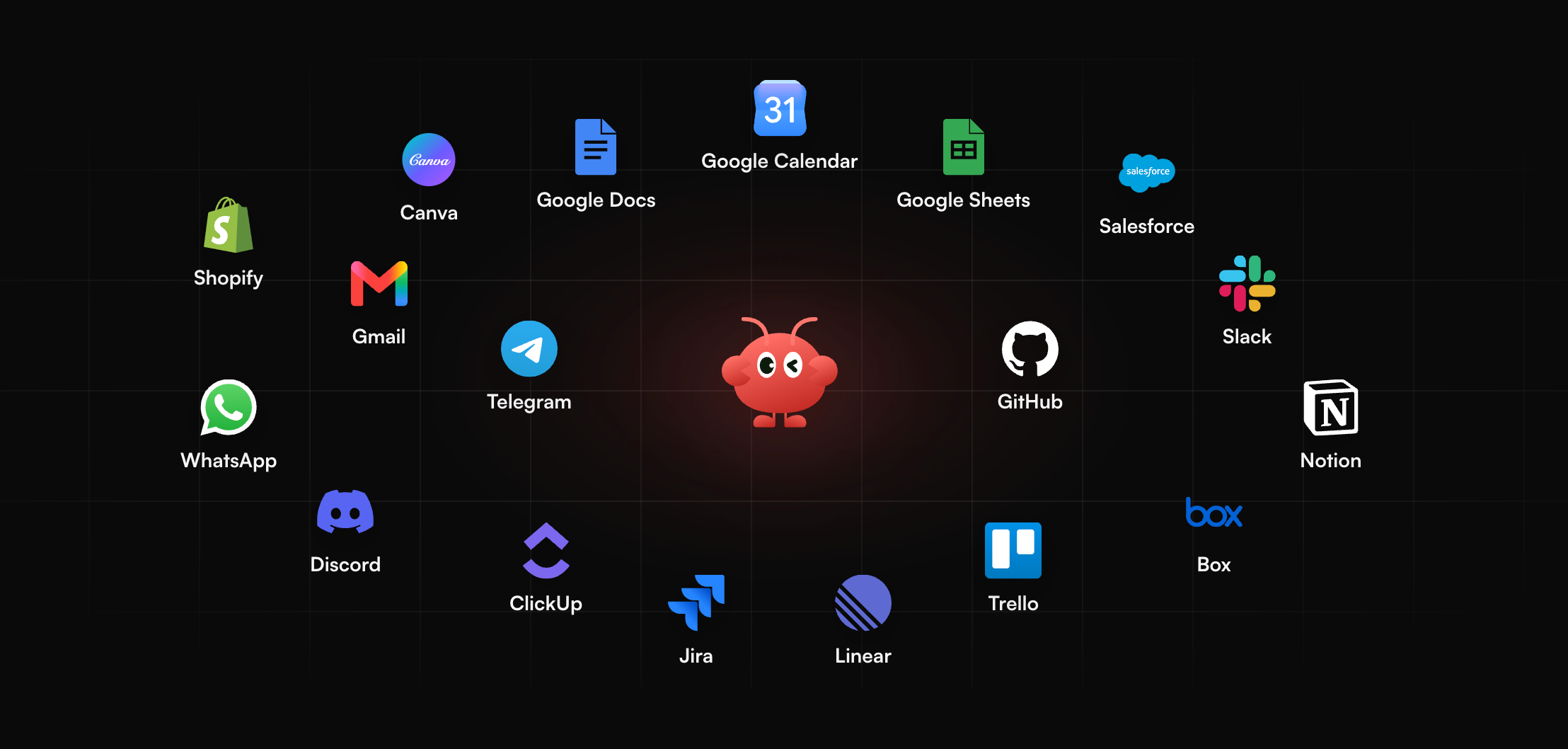
When you are still evaluating LongCat-2.5 after launch day, release watches, recurring test prompts, and bench summaries should keep landing while you are offline. Run that loop on an always-on OpenClaw or Hermes agent hosted on MyClaw—no laptop left open, no server to patch. Digests can reach you by email, Telegram, WhatsApp, or browser.
Concrete scenarios: a morning digest that flags LongCat blog or pricing changes, a scheduled checklist that reminds you to re-run your frozen prompt pack on the LongCat API, or a Friday summary that compares this week’s scores to last week’s notes—then you decide whether to widen the pilot. New to OpenClaw? See What Is OpenClaw.
- Start a MyClaw agent on OpenClaw or Hermes and point it at the channel where eval digests should arrive.
- Connect the docs folder or inbox that holds your frozen prompt pack, prior scores, and release-note links.
- Assign one recurring job first—such as a daily LongCat release watch plus a weekly prompt re-run summary—then add more checks once the drafts hold.
Conclusion
LongCat-2.5 is Meituan’s long-horizon multimodal agent bet: a 1.6T-class MoE with native vision, a 1M context window, limited-time API pricing, and vendor-labeled benches that show a clear lift from LongCat-2.0 while still trailing peers on some hard coding rows. If the job matches, trial it on the LongCat API inside your harness and score it on your own repos. If you want release watches and recurring eval digests without babysitting a server, use the hosted OpenClaw or Hermes path in the section above.
Skip the Setup, Run Best-in-Class AI Agents Now
Launch a managed OpenClaw or Hermes Agent workspace in minutes, with always-on hosting, updates, and support handled by MyClaw.